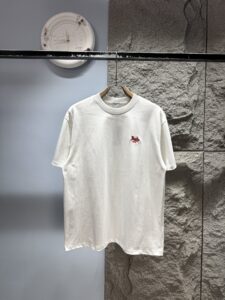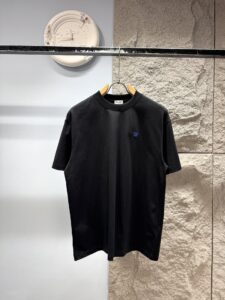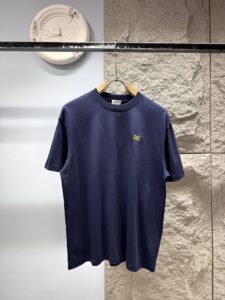

H&M Unveils Full Stella McCartney Collection: Fast Fashion Can Scale Sustainability
April 16, 2026
What does two decades of innovation in more sustainable fashion look like? This was one of the questions Stella McCartney and H&M set out to answer with their new collaboration. Combining more responsibly sourced materials with a designer label and competitive price points, the collection marks a meaningful step forward for fast fashion.
When H&M first collaborated with Stella McCartney in 2005, the term “sustainable fashion” was not yet widely used. Ethical fashion brands were small, focused mainly on organic cotton, with no industry-wide standards for measuring sustainability. Their first collection was groundbreaking, bringing Stella’s animal-free approach to the mass public and expanding what sustainable fashion could achieve at scale.
Beyond its commercial success — the collection sold out within days, with some pieces selling out within hours — it became a turning point in H&M’s sustainability journey. “Stella inspired us to do better,” said Ann‑Sofie Johansson, H&M’s creative advisor, during an online press conference. The brand began integrating organic cotton and became one of the world’s largest users of organic cotton by 2011. “Today, all of the cotton used at H&M is organic, recycled or better sourced cotton.”
This long-term commitment led Stella McCartney to agree to a second collaboration. Founded in 2001, her eponymous label has been a pioneer of vegan fashion — highly unusual in luxury fashion at the time. Its focus has expanded to include holistic environmental care, with a wide range of innovative materials, from grape‑based leather alternatives to plant‑based feathers.
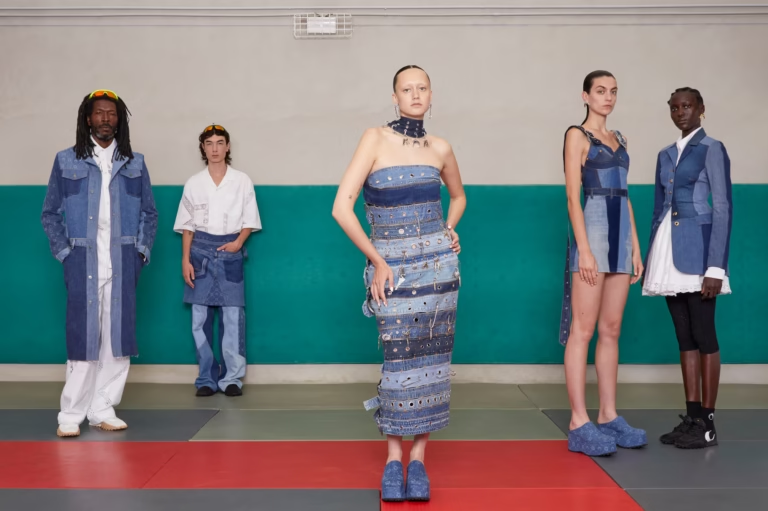
Now, Stella is making her conscious material choices accessible to a mainstream audience. The new collection remains classic Stella McCartney: structured tailoring, playful details, hints of rock ‘n’ roll grunge, and oversized elegance. It balances everyday wear and bold evening statement pieces — a category notoriously difficult to make sustainable, as glitter and shiny elements are often harmful to the environment.
Alongside the collection launch, the two brands have introduced an Insights Board. This forum brings together stakeholders across the apparel value chain — including technologists, activists, and journalists — to brainstorm and advance solutions for a more sustainable fashion industry.
“Sustainability has fallen off the agenda a little bit now. Nobody seems to talk about sustainability any longer — including H&M,” said Ann‑Sofie. “We just thought it was great to team up again, join forces. Put it back on the agenda, and keep that conversation going.”
Stella aims to reach a wider audience with this partnership. “I hate how elitist my industry is,” she said. “I hate that working in a sustainable way — sourcing better, developing mushroom leathers — means my price points are higher.”
The collection’s price range sits at the higher end of fast fashion but remains far more accessible than Stella’s main line. A GOTS‑certified organic cotton bodysuit retails at R429, while the most expensive piece — a grey trenchcoat made from 100% RWS wool — is priced at R4499. By comparison, a similar RWS wool coat from Stella McCartney’s main label costs around R61,375.
“This is not the cheapest of the cheap because there is a price that comes to doing anything good,” Stella explained. “But this is an access area. Certainly for a lot more people than normal.”
Stella also views H&M’s global reach as an opportunity to educate consumers. Each garment’s swing tag clearly highlights the materials used, encouraging shoppers to understand what they are buying.
“I want them to go, wait a minute. That’s a recycled polyester, and then when I go to the other fast fashion brand, it’s just polyester. What does that mean?”
Most items in the collection use organic cotton, including GOTS‑certified and Regenerative Organic Certified (ROC) options. Synthetic materials are recycled: textile‑to‑textile recycled polyester and recycled polyamide, often derived from fishing nets or industrial waste. Sparkling details use sequins made from recycled plastic bottles (PET) and beads made from recycled glass. Stella’s signature Falabella chains appear throughout, made from recycled aluminium, brass and zinc.
Stella hopes to drive industry change by example, proving that large brands can adopt more sustainable choices without sacrificing quality. “I believe you have to infiltrate from within,” she said. “If you can show that this can be scaled and that you don’t sacrifice on any quality for kindness, it’s a really important business moment, and a very important conscious consumer moment too.”
Launch Information
- Launch date: 7 May 2026
- Available at: Sandton City, V&A Waterfront and online via Superbalist